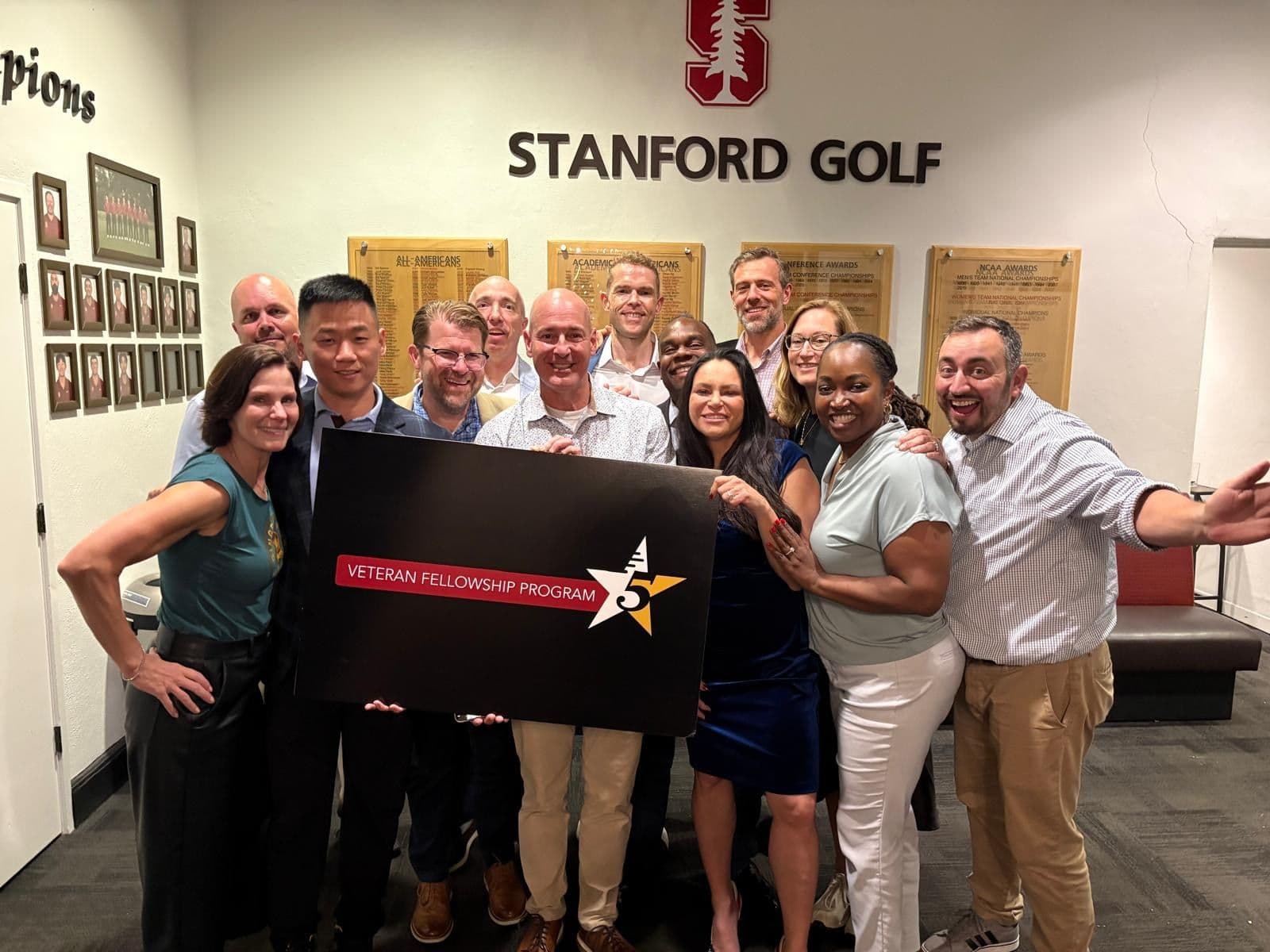
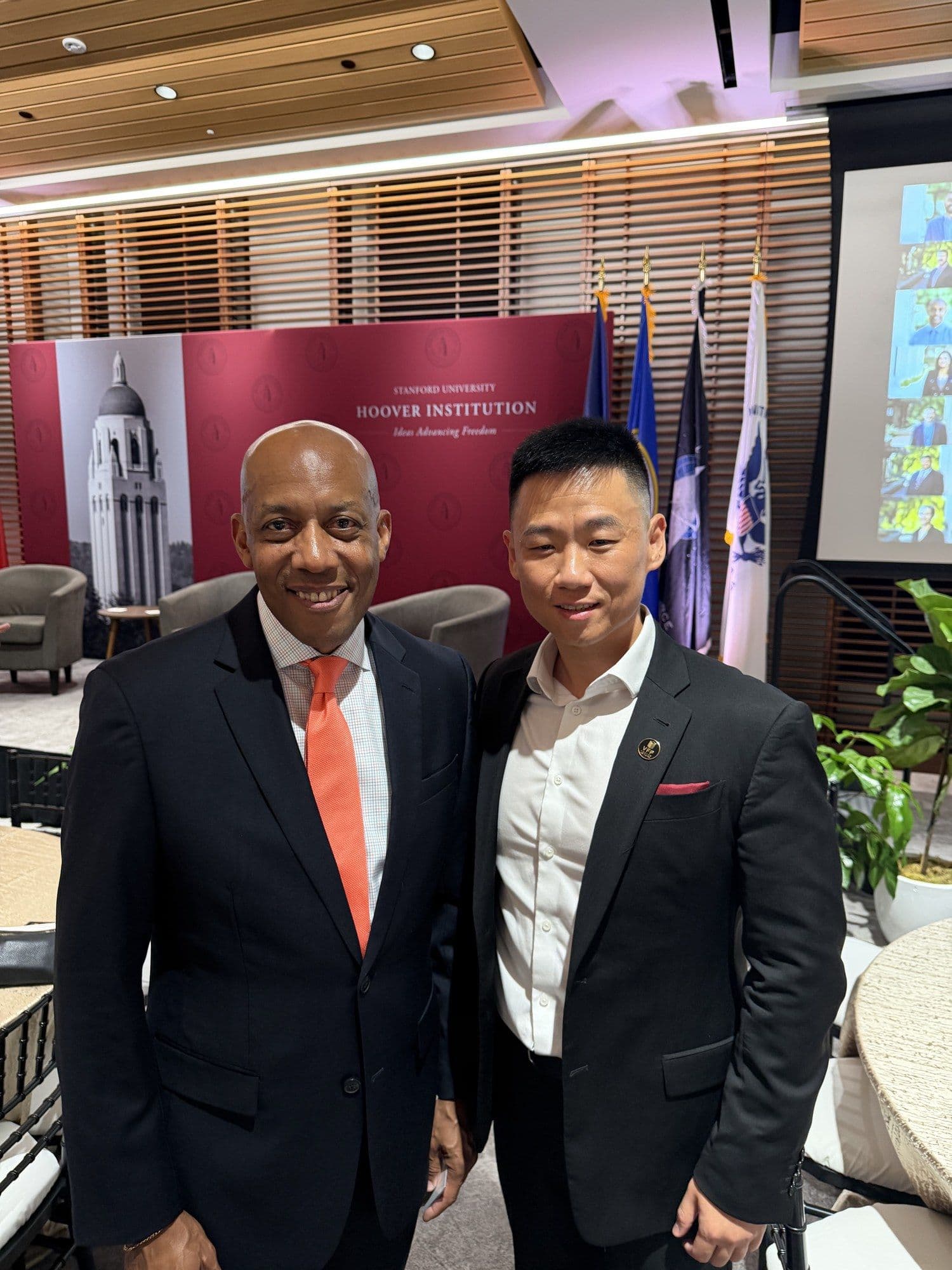
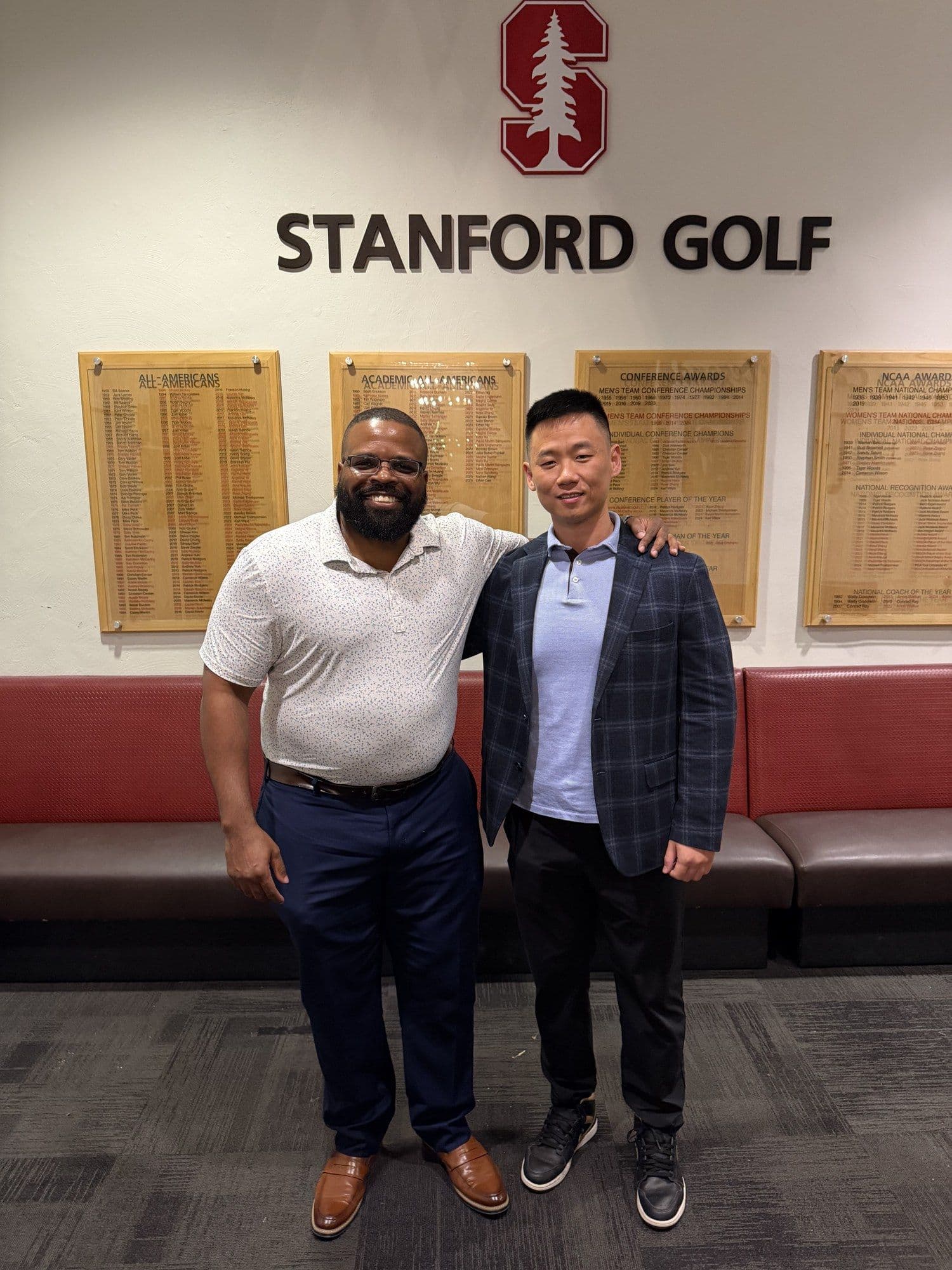
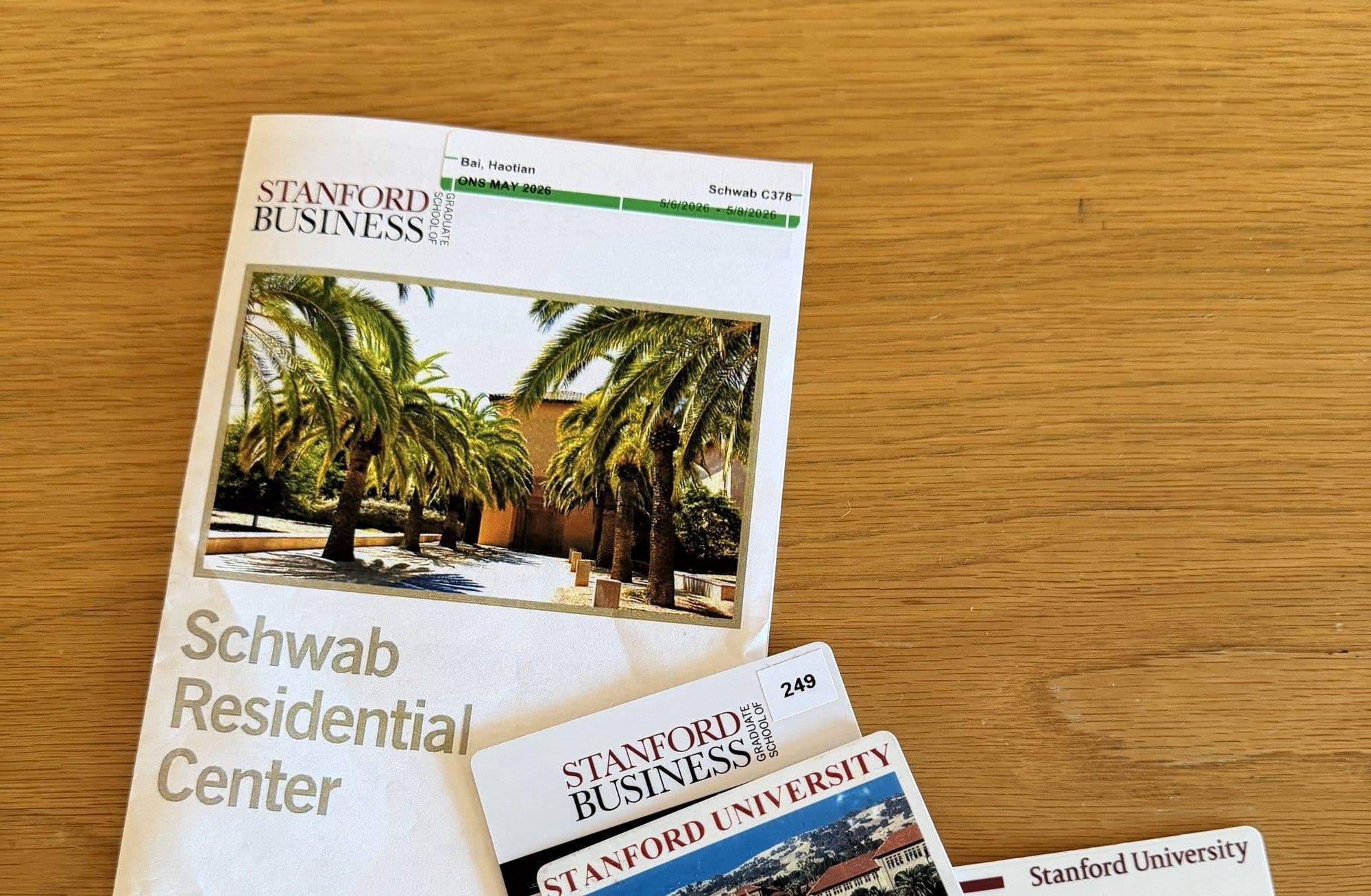
Last week, May 6-8, 2026, I had the privilege of being at the Hoover Institution at Stanford as a Bochnowski Family Veteran Fellow. I arrived thinking the week would be about leadership. It was. But by the end, the deeper lesson was fellowship.
There are rooms where history feels abstract, and there are rooms where it becomes human. Spending an evening learning from Robert Gates, Condoleezza Rice, Jim Mattis, H.R. McMaster, C.Q. Brown, and Admirals Roughead and Ellis was one of those moments that compresses a lifetime of public service into something very immediate. Their careers sit inside wars, crises, alliances, institutions, and decisions most of us only study from a distance. To sit there as an Army veteran and absorb even a small part of that judgment was profoundly humbling.
The humility matters. The point was not celebrity proximity. It was the opposite: a reminder that serious leadership is usually quiet, disciplined, and accountable to people who will never see the deliberation behind the decision.
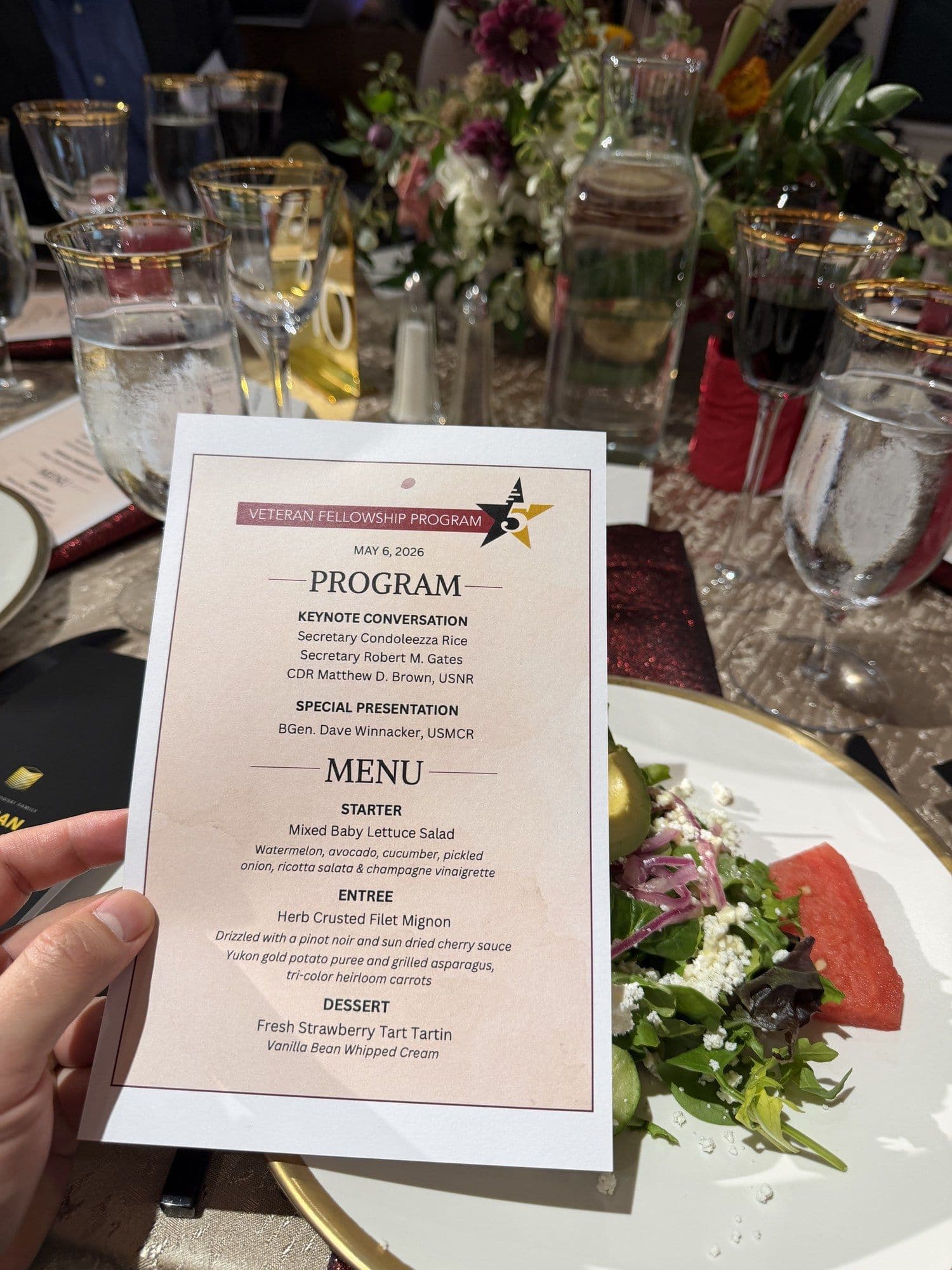
History At Close Range
What stayed with me was not a single line or one polished leadership formula. It was the pattern. Leaders who have carried national responsibility spoke with an awareness of consequence. They had confidence, but not casualness. They respected complexity without hiding behind it. They understood that institutions are made out of people, but also that people need institutions when the pressure gets real.
That is a hard balance. The military teaches pieces of it early: standards, chain of command, mission clarity, after-action learning, and the obligation to the person on your left and right. But the Hoover setting expanded the frame. It asked us to think about service across a longer arc: how democracies preserve trust, how leaders make decisions with incomplete information, how teams hold together when the facts are moving, and how memory becomes a civic resource rather than just nostalgia.
For me, that is the Hoover tone at its best: serious, historically grounded, and unsentimental about responsibility.
Skills In Service Of Judgment
The rest of the program moved from statesmanship into practice. We learned from the Stanford d.school, the Stanford Storytelling Project, and others who pushed us to sharpen how we listen, frame, communicate, and make ideas usable.
That might sound softer than national security leadership, but it is not. Design thinking and storytelling are not decorations when the work involves people under strain. They are tools for making reality legible. A good story can carry memory across a group. A good design process can surface the problem nobody wants to name. A good prototype can make a mission concrete enough that other people can join it.
That was the through-line for me. Leadership is not only the moment of command. It is the discipline of making meaning, building trust, and giving people a shared way to move.
The Fellowship Is The Point
The strongest part of the week was the fellowship itself.
Veterans do not need to have served in the same branch, rank, unit, era, or conflict to recognize something in each other. There is a speed of trust that comes from shared obligation. There is also a kind of unconditional regard that is difficult to explain without making it sound sentimental. It is not soft. It is forged out of the knowledge that people can be very different and still be bound by a covenant of care.
That camaraderie was the emotional center of the program. The lectures mattered. The workshops mattered. The access mattered. But the fellowship was the thing that turned a program into a living institution.
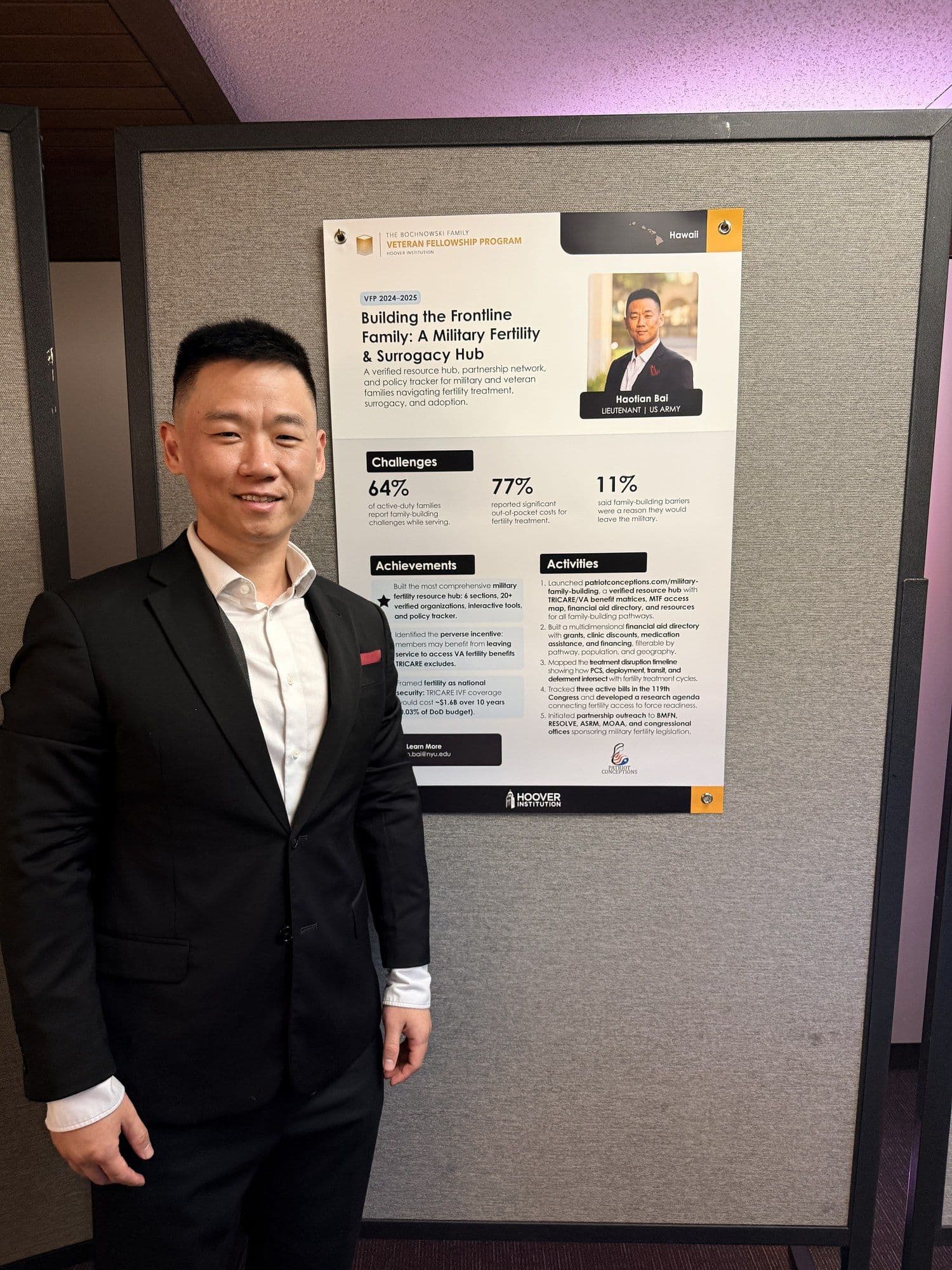
I kept thinking about Patriot Conceptions and family building.
Surrogacy is often described through contracts, clinics, screenings, milestones, payments, and legal steps. Those are essential. They protect everyone. But they are not enough to carry the human reality of the journey. The intended parent experience depends on trust. The surrogate experience depends on trust. The relationship between them cannot be reduced to process, even though process must be excellent.
At its best, surrogacy asks for a rare kind of disciplined love: love with boundaries, trust with accountability, generosity with clarity, and hope carried by people who are not all experiencing the journey from the same position. That is why I resist describing family building as a transaction. The transaction has to be right, but the relationship is what makes the journey humane.
The fellowship reminded me that trust is not a feeling we can assume. It is an operating standard we have to earn.
What I Am Taking Back
I am taking back three obligations.
First, build systems that make trust easier to keep. A family-building journey has too many handoffs to rely on charisma or memory. If a promise is made, the system should help the team remember it. If a next step matters, the participants should not have to wonder who owns it. If uncertainty is unavoidable, communication should still be clear.
Second, tell the story with enough precision that people can act on it. The Stanford Storytelling Project reinforced something I feel every day in healthcare-adjacent work: vague inspiration is not enough. People need language that helps them decide, coordinate, and endure. A story should reduce confusion, not inflate the speaker.
Third, protect the fellowship. In any serious mission, the work is sustained by people who trust one another before the outcome is certain. Veteran communities know this. Strong families know this. Great teams know this. Surrogates and intended parents, at their best, are trying to build something in that same moral neighborhood: a relationship capable of carrying fear, waiting, disappointment, joy, and responsibility without collapsing into suspicion.
That is the standard I want to keep learning from.
I went to Hoover grateful for the chance to sit close to history. I left more aware of the obligation to be worthy of the people beside me. For an Army veteran, that is familiar language. For an entrepreneur in family building, it is also a strategy.
The fellowship is not outside the work. The fellowship is the work.
Get the next one in your inbox.
Subscribe for new issues. Unsubscribe anytime.
One email. No spam. Unsubscribe anytime.
Privacy policy