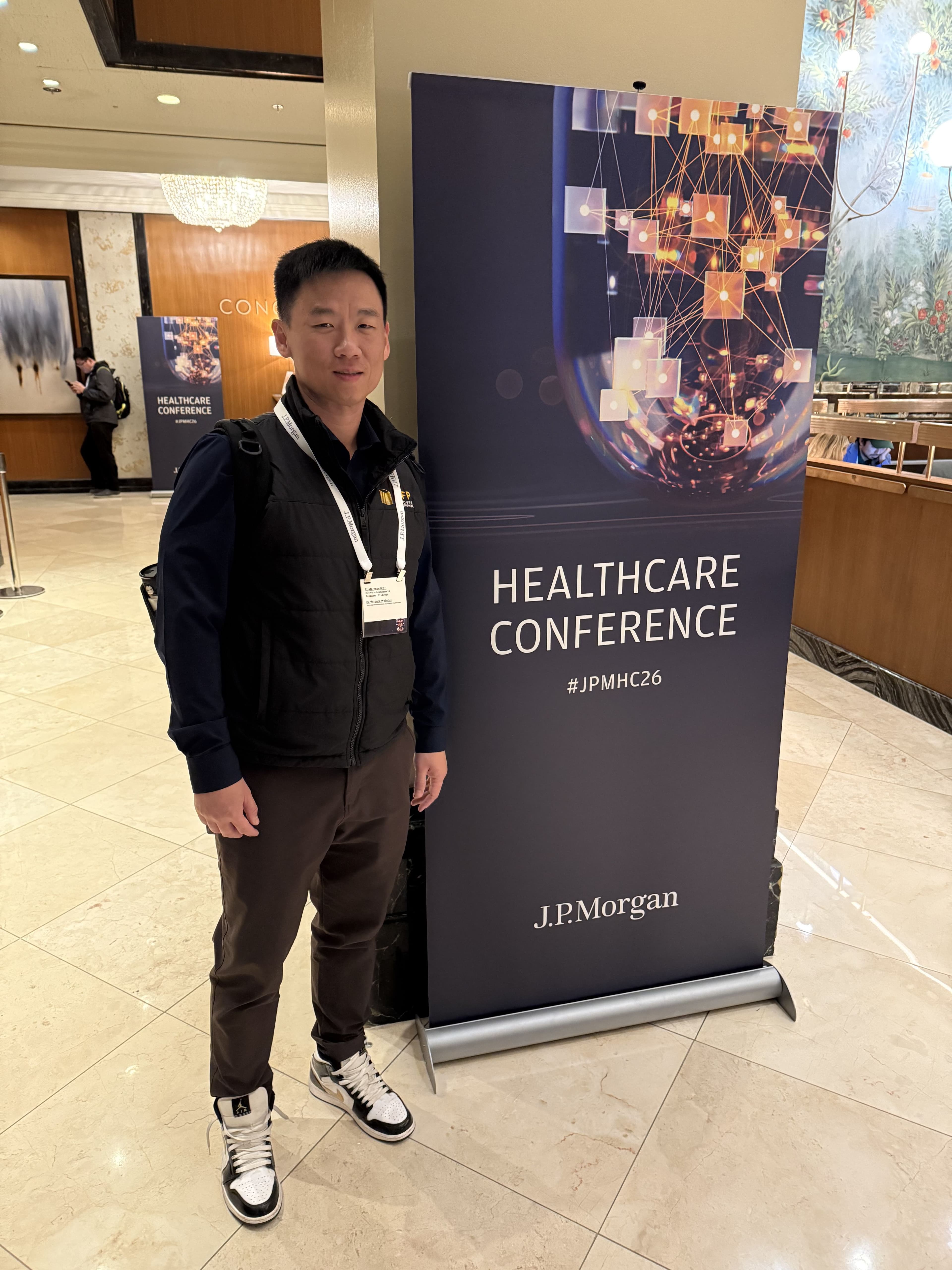
In January 2026, I was invited into one of the most concentrated healthcare rooms in the world: J.P. Morgan Healthcare Week in San Francisco.
The visible part of JPM is the main conference: public companies, private companies, investors, hospital systems, pharma, biotech, diagnostics, AI, policy, and capital moving through a few dense days. But the real lesson of the week is not only what happens on stage. It is what happens in the side rooms, the lunches, the hotel lobbies, the sponsor events, the small conversations after a panel, and the quiet moment when you realize where the industry is pointing its attention.
For me, the assignment was clear: listen for every place fertility and surrogacy belonged in the conversation.
Not as a niche. Not as a "nice to have" benefit. Not as an emotional exception to the rest of healthcare.
As infrastructure.
Women's Health Had Moved Into The Main Room
One of the most important signals from the week was how seriously women's health was being discussed.
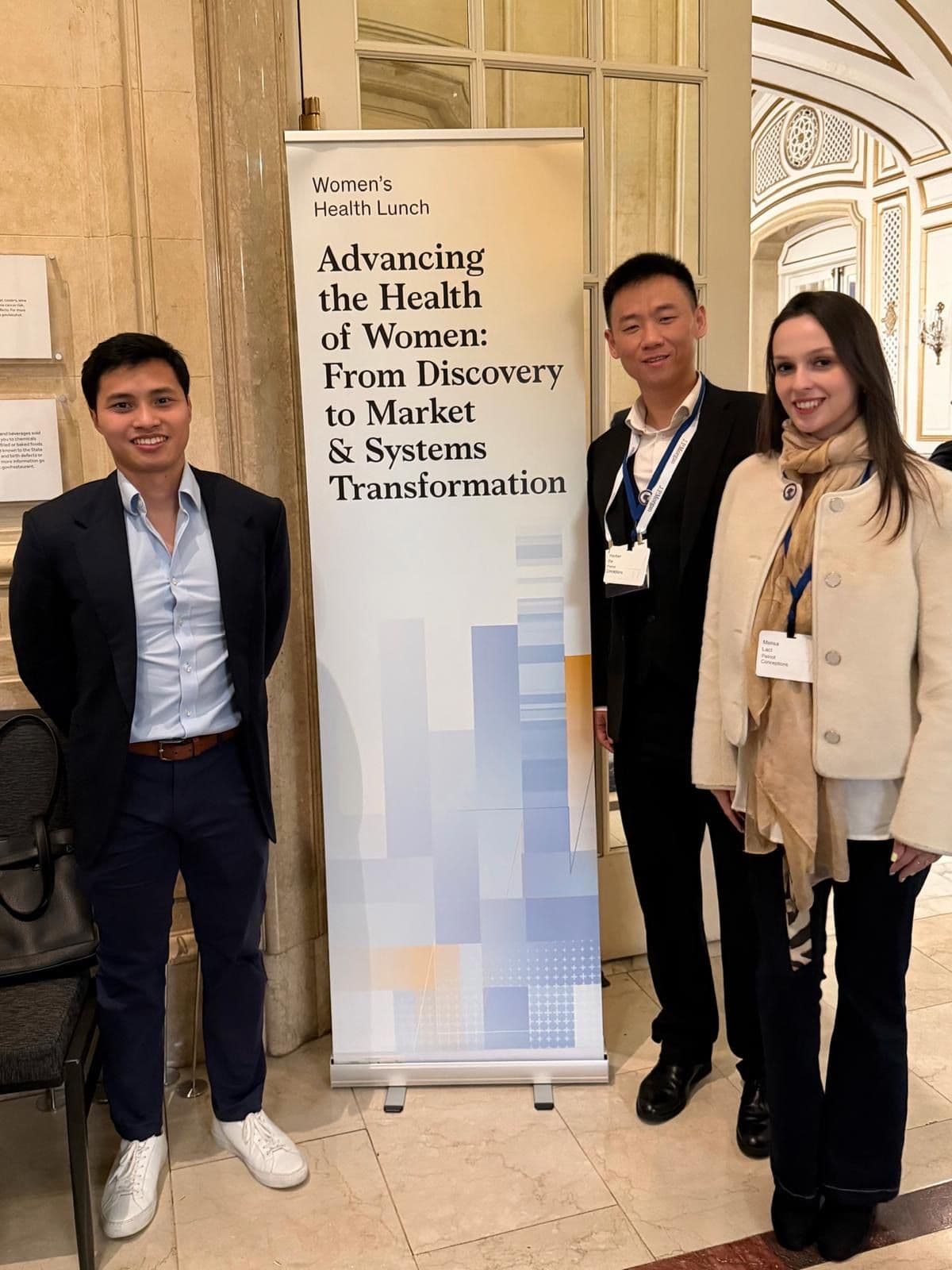
The JPM agenda itself made room for the category: OpenAI and the healthcare ecosystem, employer drug costs, investment in women's health innovation, ROI for menopause, Asia growth markets, and emerging biotech. Around the main conference, the week carried even more focused conversations: women's health investment, system redesign, discovery-to-market translation, executive leadership, and the question of how capital can finally meet the actual size of women's health needs.
At the McKinsey women's health lunch, the sign said it plainly: "Advancing the Health of Women: From Discovery to Market & Systems Transformation."
That title is exactly where the conversation needs to be.
For too long, women's health has been treated as a set of isolated categories: fertility over here, menopause over there, maternal health somewhere else, pelvic health in another corner, benefits in HR, clinic operations in a provider system, policy in a separate room, and patient experience left to the person trying to navigate all of it.
But women do not experience care in categories.
They experience timing, cost, access, uncertainty, work, family, biology, insurance, stigma, and fragmented systems all at once.
Fertility care exposes that fragmentation early. Surrogacy exposes it even more clearly. A surrogacy journey is not just a clinic case. It is medical, legal, emotional, financial, logistical, and relational. It involves intended parents, surrogates, fertility clinics, attorneys, escrow partners, insurance reviewers, psychologists, nurses, coordinators, employers, and sometimes multiple states or countries. If the system is not designed well, people feel the fragmentation immediately.
That is why fertility and surrogacy belong in the center of the women's health conversation.
They are not edge cases. They are stress tests for whether healthcare can coordinate around a real person's life.
Progyny Select Matters Because Access Should Not Stop At The Fortune 500
I also went to the Progyny team's presentation, and one part made me genuinely happy: Progyny is rolling out a small-business product, Progyny Select.
The reason this matters is simple. Fertility benefits have too often been concentrated among large employers with the budget, HR infrastructure, and benefits consultants needed to offer comprehensive coverage. That creates a quiet inequality. A software engineer at a large company may have a meaningful family-building benefit, while an equally hardworking employee at a 150-person company may have almost nothing.
That gap is not just a benefits-design issue. It changes who can pursue IVF. It changes who can preserve fertility before treatment or aging makes the path harder. It changes who can consider donor eggs, donor sperm, embryo creation, or surrogacy without immediately running into a financial wall. It changes whether family building feels like a supported healthcare journey or a private crisis.
Progyny Select is important because it tries to solve one of the hardest small-employer problems: volatility. A small company may want to support fertility, but one or two high-cost cases can be hard to budget for. A pooled-risk model makes the category more predictable, which makes it more offerable.
For Patriot Conceptions, that is a category-level signal.
If fertility benefits can move downstream from the largest employers to smaller companies, then more families can enter the system with support instead of fear. More intended parents can ask better questions earlier. More employers can treat family building as part of workforce resilience. More care teams can coordinate around coverage instead of rebuilding the financial plan from scratch for every case.
And eventually, surrogacy should be part of that conversation too.
Surrogacy is more complex than a traditional fertility benefit, but that is exactly why it needs thoughtful benefit design, not silence. The families who need gestational surrogacy are not asking for luxury. Many are navigating medical impossibility, cancer history, uterine factor infertility, pregnancy risk, same-sex family building, or other paths where carrying a pregnancy is not possible or safe.
The more employers learn to support family building with discipline, the more space there is to explain surrogacy correctly: clinically, legally, financially, and ethically.
Meeting Kindbody's David Stern
It was also a pleasure to meet David Stern, Kindbody's CEO.
Kindbody sits at an important intersection: fertility clinics, family-building benefits, employer relationships, patient navigation, and the operational reality of delivering care at scale. That intersection is hard. It is easy to draw a clean diagram of fertility care. It is much harder to run the labs, clinicians, coordinators, benefits workflows, medication handoffs, patient communications, and employer promises without losing the humanity of the journey.
That is why conversations with fertility operators matter.
The industry does not need more slogans about access. It needs operating models that make access real. It needs clinic networks that can deliver quality. It needs benefit platforms that do not create false hope. It needs patient navigation that respects the seriousness of the decision. It needs surrogacy partners who understand that a family-building journey cannot be reduced to a marketplace screen.
Meeting David was a reminder that the next chapter of fertility care will be built by people who can hold both sides of the work: the clinical infrastructure and the human experience.
That is also the place where Patriot Conceptions has to keep building.
OpenAI's Healthcare Move Was Not A Side Headline
OpenAI's acquisition of Torch was one of the most important signals of the week for anyone building in healthcare operations.
Torch was described as a health-data startup focused on unifying lab results, medications, and visit recordings. That may sound technical, but in healthcare the technical layer is often where the real patient experience is won or lost.
Fertility care is a perfect example.
A patient's story is scattered across cycle calendars, lab results, ultrasound measurements, medication instructions, embryo reports, genetic testing, procedure notes, billing, insurance documents, portal messages, legal milestones, and emotional context that rarely lives in the same system. In surrogacy, the fragmentation grows: intended-parent records, surrogate screening, OB clearance, clinic protocols, psychological evaluation, legal contracts, insurance review, escrow, matching notes, travel, and delivery planning.
AI cannot responsibly help with that work if it sees only fragments.
But if the data layer becomes more coherent, AI can become more useful in the right way. It can help summarize a case timeline. It can prepare better questions for a clinical appointment. It can flag missing documents. It can distinguish an estimate from a confirmed instruction. It can help a coordinator see what changed. It can make the next step clearer without pretending to replace the physician, attorney, psychologist, nurse, or case manager.
That is the meaning I took from OpenAI's healthcare push.
The future is not a generic chatbot giving medical advice. The future is governed, privacy-aware, context-rich support that helps people navigate complex care with better memory and less avoidable confusion.
For fertility and surrogacy, that is not futuristic. It is overdue.
The Side Events Were The Real Map
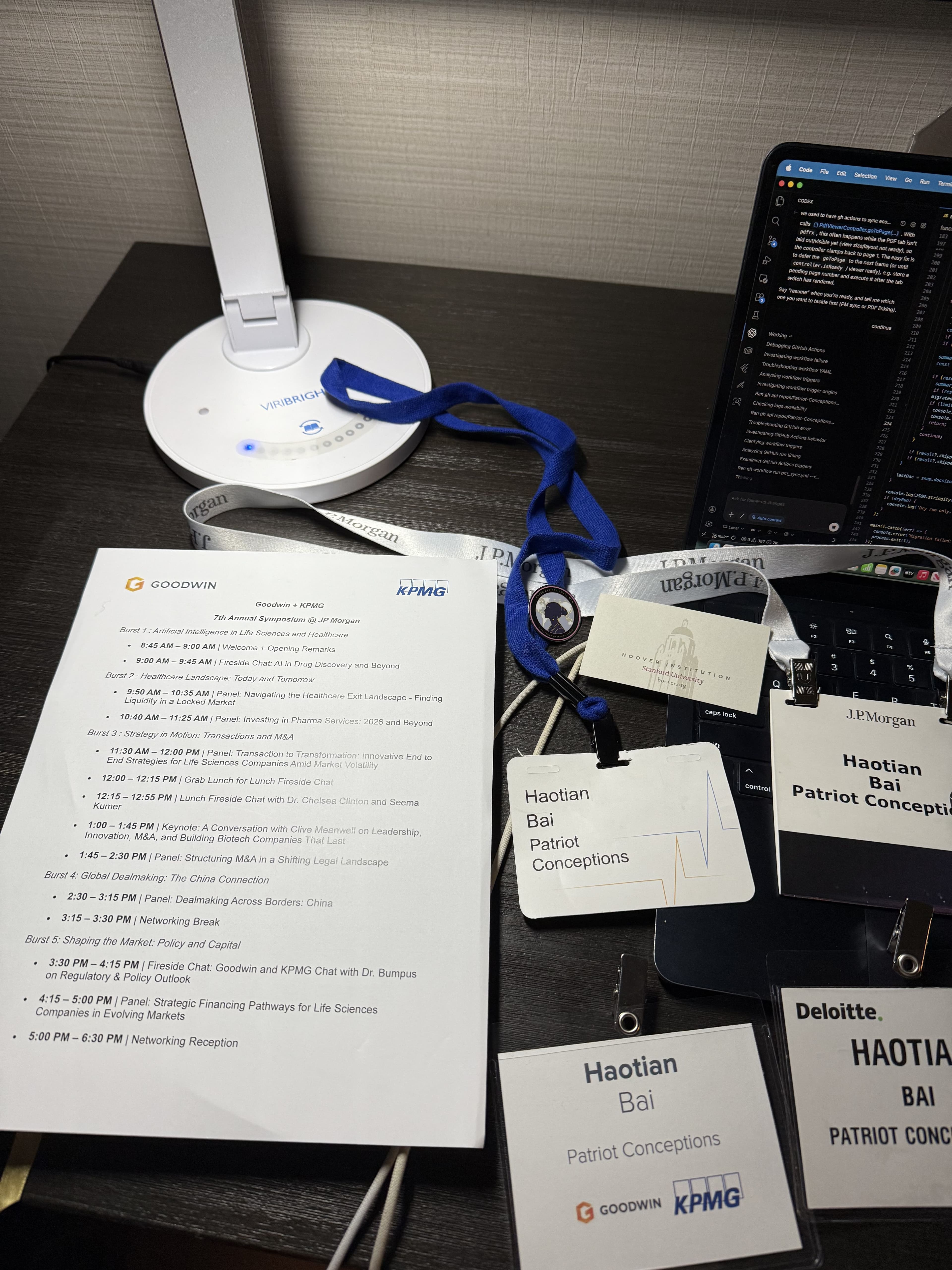
The side events hosted by firms like Deloitte, McKinsey, Goodwin, and KPMG were not distractions from JPM. They were part of the map.
The Goodwin and KPMG symposium was full of the language that defines healthcare in 2026: AI in drug discovery, liquidity in a locked market, pharma services, transaction strategy, M&A, China, regulatory outlook, policy, and financing pathways. At first glance, that might sound far from surrogacy.
It is not.
Every one of those themes touches family building.
AI in healthcare raises the question of how sensitive fertility and reproductive data should be used, protected, and interpreted. M&A and financing shape which clinic networks survive, consolidate, or expand. China and cross-border dealmaking matter because reproductive care has always moved across borders, even when policy and culture lag behind. Regulatory and policy outlook matters because surrogacy lives at the intersection of state law, medical ethics, insurance, and family formation. Healthcare exits and capital markets matter because access depends on whether serious operators can build durable institutions, not just venture-backed experiments.
The same is true of the professional-services rooms.
Deloitte conversations are an opening to talk about workforce strategy, family-building benefits, employer retention, and the hidden cost of unsupported infertility. McKinsey's systems-transformation frame is an opening to talk about women's health as an operating model, not a campaign. Goodwin is an opening to talk about legal architecture, M&A, regulatory diligence, and cross-state surrogacy complexity. KPMG is an opening to talk about data governance, transaction risk, health-system strategy, and the economics of patient-centered care.
That is the work: translating the language of the room into the lived reality of families.
The Fertility Conversation Belongs Everywhere
By the end of the week, I kept coming back to the same conviction: fertility and surrogacy should not be waiting for someone else to invite them into the future of healthcare.
They belong in women's health because reproductive biology, pregnancy, miscarriage, menopause, oncology fertility preservation, and maternal risk are not separate from the rest of women's lives.
They belong in employer benefits because family formation affects retention, productivity, mental health, financial security, and whether employees feel seen by the organizations that rely on them.
They belong in AI because the case timeline is complex, sensitive, fragmented, and full of decisions where better context can reduce harm.
They belong in healthcare M&A because consolidation without care quality can damage trust, but disciplined scale can expand access.
They belong in policy because the law determines whether families can move safely through donor, IVF, embryo, and surrogacy pathways.
They belong in cross-border conversations because intended parents already cross borders for care, and the industry has to be honest about quality, ethics, cost, and protection.
They belong in finance because affordability is not a side issue. It is often the deciding issue.
Most of all, they belong in the rooms where healthcare decides what is worth building.
That was the real privilege of being at JPM Healthcare Week. Not simply being in a sought-after room, but seeing how many doors there are to bring this conversation forward.
Patriot Conceptions exists because family building deserves serious infrastructure: clinical coordination, ethical matching, legal clarity, privacy-first operations, culturally competent support, and systems that make trust easier to keep.
JPM made the opportunity visible.
Now the work is to build it.
Get the next one in your inbox.
Subscribe for new issues. Unsubscribe anytime.
One email. No spam. Unsubscribe anytime.
Privacy policy