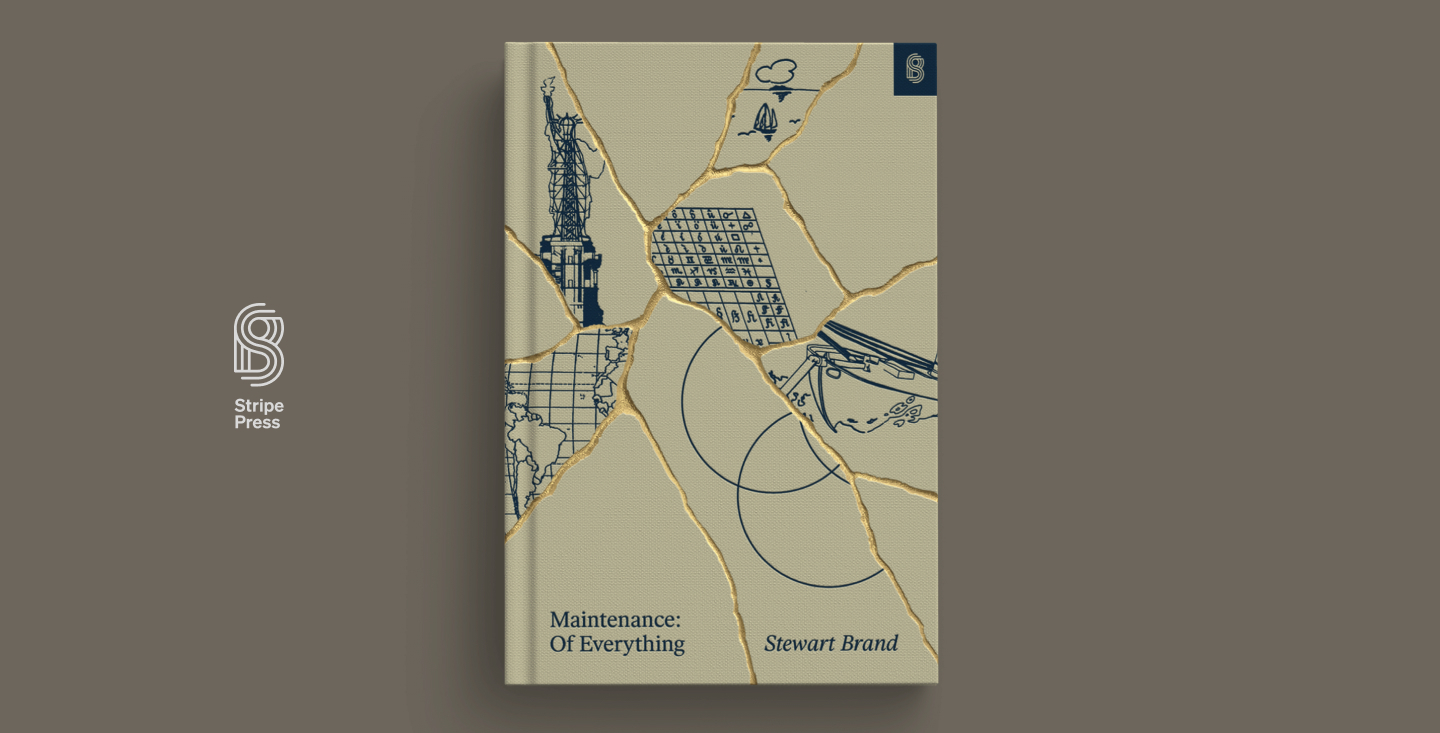



Maintenance: Of Everything, Part One
Why it stays on the shelfUseful for healthcare operations, protocol discipline, and any organization that has to keep promises after the launch moment passes.
Open bookHaotian Bai / Reads
Operator shelf
Books for building durable systems.
A working shelf for maintenance, institutional design, healthcare operations, AI, company building, and the civic machinery behind progress.
Choose a shelf
The list is organized by operating problem, not by publication order. Hover or focus a title to make it the current field note.
Current field note
Maintenance as strategy, not housekeeping.
Why it stays on the shelfUseful for healthcare operations, protocol discipline, and any organization that has to keep promises after the launch moment passes.
Open bookFull reading list
Nineteen books, one operating question: what should a builder understand before asking institutions, teams, and technology to carry more weight?
Useful for healthcare operations, protocol discipline, and any organization that has to keep promises after the launch moment passes.
The operating lens transfers cleanly from factories to clinics, education, housing, and any service that needs quality at scale.
A live map for product judgment, policy risk, and the operational gap between impressive demos and dependable systems.
A useful provocation for deciding which temporary excesses create real capacity and which only create noise.
A compact operating manual for judgment when decisions are ambiguous, irreversible, or socially pressured.
Founder motion has to become operating cadence: hiring, feedback, decision rights, documents, and repeatable management practice.
A bridge between science, policy, military urgency, and execution; especially relevant to healthcare and public-private operating models.
Keeps the question of abundance concrete: energy, transportation, manufacturing, and the parts of progress that cannot be shipped as software alone.
A reminder that ecosystems are made from hardware constraints, capital, talent density, and people taking technical risk early.
Useful when designing funding, review, and accountability systems that should not accidentally delete the non-obvious work.
A clean lens for public digital infrastructure: who carries the work, who captures the value, and what breaks when attention moves on.
A discipline for builders who need taste, rigor, and the courage to work on problems that might matter for decades.
A useful diary of craft, doubt, persistence, and shipping when the work is still fragile.
Useful for founder-led communities, patient communities, alumni groups, and any movement that cannot be managed by broadcast alone.
Covers the practical questions that decide whether software teams get leverage: migrations, debt, sizing, succession, and pace.
Important for anyone communicating through distrust, platform dynamics, and public institutions that no longer control the information surface.
A counterweight to short-horizon decision making: compounding, responsibility, freedom, and welfare over long timeframes.
A reminder that technology revolutions need patrons, labs, taste, and a narrative strong enough to organize decades of work.
Useful for executive hiring, boards, capital, M&A, and the moments when company design becomes more consequential than product taste alone.
Haotian Bai
I use this shelf as a map for systems that have to work in public: teams, clinics, software, policy, and the institutions that hold them together.
Read essays